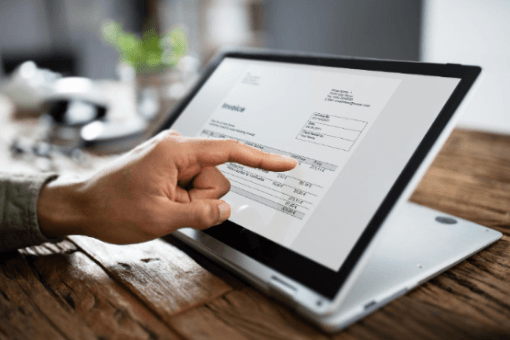
| Definition A purchase order (PO) is a document issued by a buyer to a seller before delivery, specifying what is being ordered, the quantity, the agreed price, and the expected delivery date. An invoice is issued by the seller to the buyer after delivery, requesting payment for the goods or services provided. A PO initiates the transaction; an invoice closes it. |
Confusing a purchase order vs invoice is one of the most common errors in business finance, and an easy one to make. They cover similar information (what was ordered, at what price, between which parties), they often arrive in the same inbox, and some businesses use the terms interchangeably. But they serve completely different purposes at completely different points in a transaction.
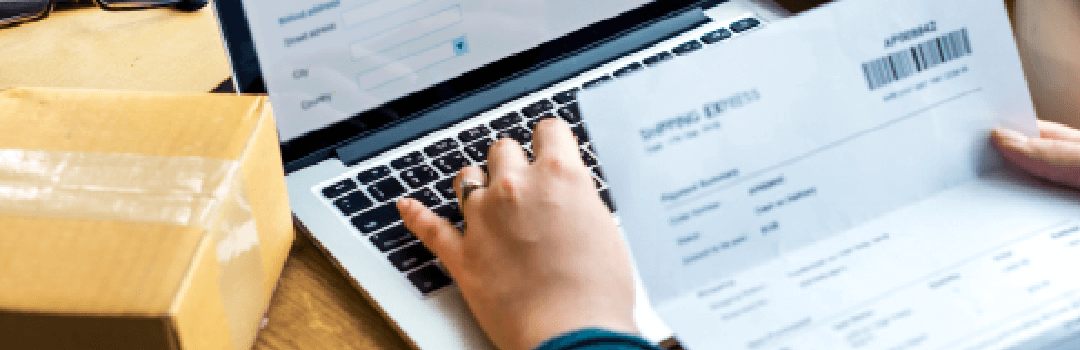
This guide explains what each document is, the key differences between them, which comes first, whether a purchase order is legally binding, and answers the most common follow-on questions, including the difference between a PO and a sales order, a PO and a receipt, and an invoice and a bill.
What Is a Purchase Order?
A purchase order (PO) is a formal document issued by a buyer to a seller that specifies exactly what the buyer wants to purchase, at what price, in what quantity, and by when. It is the buyer’s official way of placing an order and once the seller accepts it, it becomes a binding agreement between both parties.
A well-formed purchase order typically contains:
- PO number – a unique identifier used to track the order and referenced on the corresponding invoice
- Buyer details – company name, address, and contact information
- Seller details – supplier name, address, and contact
- Date of issue and required delivery date
- Line items – description, quantity, and unit price of each product or service ordered
- Total value of the order
- Payment terms – when and how the invoice will be paid (e.g., net 30 days)
- Delivery address
- Buyer’s authorisation or signature
For example, a procurement manager at a retail business orders 500 units of a product from a supplier at $20 each, with delivery in two weeks. The buyer sends a PO documenting these terms. Once the supplier accepts the PO, both parties are committed, the supplier must deliver 500 units at $20 each, and the buyer must pay for them on receipt of a valid invoice.
What Is an Invoice?
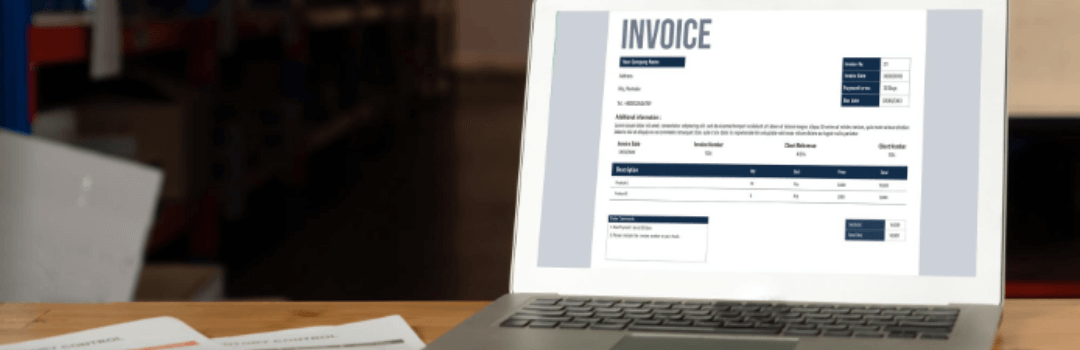
An invoice is a formal payment request issued by a seller to a buyer after goods or services have been delivered. It documents what was provided and specifies the amount owed, the due date, and the payment method. While a purchase order is forward-looking (what is expected), an invoice is backward-looking, it records what has already happened and requests compensation for it.
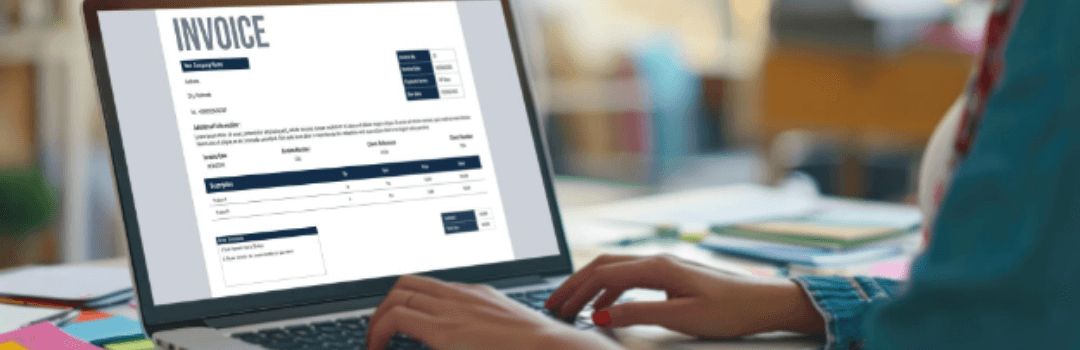
A standard invoice contains:
- Invoice number – a unique reference number for the seller’s records
- PO number – the purchase order number from the corresponding PO, linking the invoice back to the original order
- Seller details – company name, address, tax identification number
- Buyer details – company name, address
- Invoice date and payment due date
- Line items – description, quantity delivered, and unit price
- Subtotal, applicable taxes, and total amount due
- Payment terms and accepted payment methods
- Bank or payment details
The PO number on the invoice is the link between the two documents, it tells the buyer’s AP team which order the invoice corresponds to, enabling them to match the invoice against the original PO and the delivery record before releasing payment.
What Are the Key Differences Between a Purchase Order and an Invoice?
The simplest way to remember the distinction: a purchase order is a promise to buy; an invoice is a request to pay. Here is how they compare across every key dimension:
| Feature | Purchase Order | Invoice |
| Who issues it | Buyer | Seller |
| When issued | Before delivery – to place the order | After delivery – to request payment |
| Primary purpose | Commits the buyer to a purchase | Requests payment for what was delivered |
| Legal status | Becomes a binding contract once the seller accepts it | A payment request – not a contract on its own |
| PO number | It IS the PO – carries its own PO number | References the PO number from the buyer’s order |
| Proof of payment | No – it commits to pay, not confirms payment | No – proof of payment comes from a receipt |
| Initiates or closes transaction | Initiates – opens the procurement process | Closes – documents the financial obligation after delivery |
| Used in 3-way matching as | Document 1 of 3 (PO) | Document 3 of 3 (invoice) |
| Internal/external document | Internal authorisation sent externally to supplier | External request received from supplier |
What Do a Purchase Order and an Invoice Have in Common?
Despite their different roles, purchase orders and invoices share several features:
- Both contain the same core transaction details: buyer and seller information, item descriptions, quantities, and prices
- Both are legally important documents that can be used as evidence in a dispute
- Both are essential for accurate accounting, audits, and financial reporting
- Both help prevent errors: a PO by authorizing what can be purchased, an invoice by recording what was actually delivered
- The invoice references the PO number, linking the two documents through the procurement lifecycle
What Comes First: a Purchase Order or an Invoice?
A purchase order always comes first. The buyer issues the PO before the goods or services are delivered. The seller issues the invoice after delivery. Here is the typical sequence of how a purchase order and invoice work together in a single transaction:
- Buyer issues a PO – specifying what is being ordered, the agreed price, and the delivery date.
- Supplier reviews and accepts the PO – at this point, the PO becomes a legally binding contract.
- Supplier delivers the goods or services.
- Buyer’s receiving team creates a goods receipt note (GRN) confirming what arrived.
- Supplier issues an invoice – referencing the PO number: requesting payment for what was delivered.
- AP team matches the invoice to the PO and the GRN (three-way matching) before approving payment.
- Payment is released to the supplier.
- Supplier issues a receipt confirming payment was received. Buyer files all documents for their records.
This sequence, PO first, then delivery, then invoice, then payment, is the standard procurement cycle. Skipping the PO step means there is no pre-authorized record to match the invoice against, which increases the risk of errors, fraud, and duplicate payments.
Is a Purchase Order Legally Binding?
Yes. A purchase order becomes a legally binding contract once the seller accepts it. Before acceptance, it is a non-binding offer from the buyer.
‘Acceptance’ can be explicit. A written or verbal confirmation from the supplier, or implied by conduct, such as the supplier shipping the goods. Once accepted, both parties are bound by the terms of the PO: the buyer is obligated to pay for the ordered goods, and the supplier is committed to delivering them as specified.
For the buyer, the PO provides legal protection in cases of non-delivery or incorrect goods. For the supplier, it provides protection against non-payment or order cancellation after fulfilment has begun.
Can a Purchase Order Be Cancelled After Acceptance?
Generally, yes. But only with mutual consent, and the process should be documented. If the PO includes cancellation terms, those terms govern. If the supplier has already incurred costs in fulfilling the order, they may be entitled to compensation. Businesses with specific concerns about cancellation rights should review their jurisdiction’s contract law or consult a legal advisor.
Is an Invoice Legally Binding?
An invoice is not a contract by itself. It is a payment request. However, invoices can be used as legal evidence in a financial dispute, and their enforceability as a claim for payment may depend on the applicable jurisdiction and the terms of any underlying agreement. In practice, a properly issued invoice that references an accepted PO carries strong evidentiary weight in most jurisdictions.
Can an Invoice Exist Without a Purchase Order?
Yes. Not all invoices are linked to a purchase order. Invoices without a corresponding PO are commonly called non-PO invoices or unmatched invoices. They arise in several common scenarios:
- Small or one-off purchases made informally (e.g., office supplies bought online without a formal procurement process)
- Emergency purchases where there was no time to raise a PO first
- Service contracts and subscriptions where a recurring invoice is issued without a PO being raised for each payment
- Indirect or MRO (maintenance, repair, and operations) spend where a formal PO process does not exist
Non-PO invoices carry a higher risk of error and fraud because there is no pre-authorized document to match them against. They require additional scrutiny, manual GL coding, additional approval steps, and more thorough validation before payment, and they are one of the primary sources of invoice exceptions in AP teams that process high volumes.
For AP teams evaluating automation, how a platform handles non-PO invoices is an important capability question: it should classify, code, and route them automatically rather than dropping them into a blanket manual-review queue. See how Serina handles non-PO invoice processing.

Is a Purchase Order Proof of Payment?
No. A purchase order is not proof of payment. It is proof of intent to purchase, a commitment to pay, not evidence that payment has been made.
Here is how the three payment-related documents relate to each other:
- Purchase Order: Issued before delivery. Commits the buyer to pay once the goods or services are received.
- Invoice: Issued after delivery. Requests payment from the buyer. Not proof of payment.
- Receipt: Issued after payment. Confirms that payment was received and the transaction is complete. This is proof of payment.
A PO on its own cannot be used to demonstrate that a transaction has been settled. For proof of payment, the relevant document is a payment receipt or a remittance advice note, issued or recorded after the payment is processed.
What Is the Difference Between a Purchase Order and a Sales Order?
A purchase order is issued by the buyer; a sales order is issued by the seller. They often document the same transaction, from opposite perspectives.
When a buyer sends a PO to a supplier, the supplier may respond with a sales order (also called an order confirmation or order acknowledgement) confirming that the terms are accepted and the order will be fulfilled. The PO is the buyer’s record of what they want to purchase; the sales order is the seller’s record of what they have committed to supply.
| Feature | Purchase Order | Sales Order |
| Issued by | Buyer | Seller |
| Purpose | Requests delivery of goods/services | Confirms the order will be fulfilled |
| Perspective | Buyer’s procurement record | Seller’s fulfilment record |
| Legally binding | Yes, once seller accepts | Yes, represents seller’s acceptance |
| Sent to | Supplier | Buyer (as confirmation) |
In many B2B transactions, the PO and the sales order reference each other, the sales order carries the buyer’s PO number as confirmation that it corresponds to the original purchase request.
What Is the Difference Between a Purchase Order and a Receipt?
A purchase order is issued before delivery; a receipt is issued after payment. They sit at opposite ends of the procurement cycle.
- Purchase Order: Created by the buyer before delivery. Commits to a purchase. Not proof that anything has been delivered or paid.
- Invoice: Issued by the seller after delivery. Requests payment. Not proof that payment was made.
- Payment Receipt: Issued after payment is processed. Confirms the transaction is complete and money has been transferred. This is the proof of payment.
Note: in procurement, the term ‘goods receipt’ or ‘goods receipt note (GRN)’ refers to something different, it is the document the buyer’s receiving team creates to confirm what was delivered, not a payment document. A GRN is used in three-way matching; a payment receipt is the seller’s confirmation that money was received.
What Is the Difference Between an Invoice and a Bill?
An invoice and a bill refer to the same document- a payment request. The terminology difference is one of perspective: the seller calls it an invoice; the buyer receives it as a bill. In procurement context, ‘invoice’ is the standard formal term. In everyday usage (utilities, restaurants), ‘bill’ is the more common informal term.
How Does Automation Help Manage Purchase Orders and Invoices?
When a business processes hundreds or thousands of invoices per month, manually matching each one to its purchase order and goods receipt becomes a significant operational burden. Errors compound. Payments are delayed. Disputes accumulate. That is where AP automation removes the friction.
Modern AP automation platforms handle the full cycle: AI and OCR extract invoice data from any format, match it to the relevant PO and goods receipt at line-item level, flag discrepancies, route exceptions to the right approver, and post approved invoices to the ERP automatically.
Serina automates the end-to-end PO-to-payment cycle: from invoice capture and three-way matching to ERP posting (SAP, Oracle, and Microsoft Dynamics) and vendor portal self-service, for AP teams handling high volumes across multiple vendors and cost centers. See how Serina automates the purchase order and invoice process, or read the full guide to three-way matching to understand how POs and invoices connect at the payment decision point.
Bottomline
Used correctly, a purchase order and an invoice work as a pair, one to commit to a purchase before it happens, the other to request payment after it does. Together, they form the paper trail that keeps procurement accurate, disputes manageable, and audits straightforward.
For teams processing these documents at scale, that paper trail is most reliable when it is automated, when every invoice is matched to its PO and delivery record automatically, without manual cross-checking. See how Serina manages the full purchase order and invoice cycle.